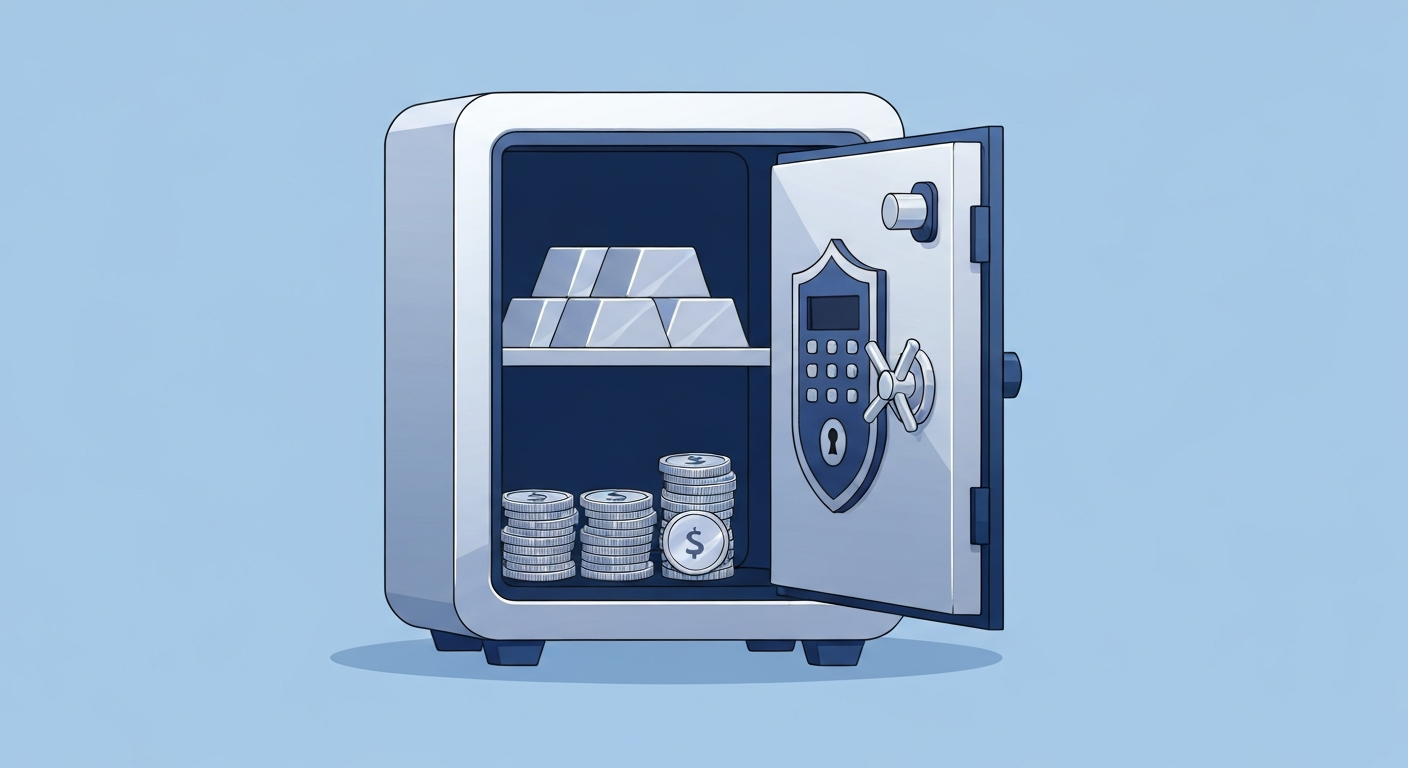
Buying physical silver is the easy part. Keeping it safe at home — secure from theft, damage, and prying eyes — is where many new investors get nervous, and rightly so. Store it carelessly and you risk losing it; store it wisely and you enjoy the peace of mind that comes with holding a tangible asset in your own hands. Here is how to store silver safely at home.
Why home storage appeals
Many silver owners prefer home storage because it gives them direct, immediate access to their metal with no ongoing vault fees and no reliance on a third party. That control is a big part of silver’s appeal as a private, tangible store of value. The trade-off is that security becomes entirely your responsibility, so it pays to do it properly.
Use a quality safe
The foundation of home storage is a good safe. Look for two features in particular: a solid burglary rating to resist forced entry, and a fire rating, since silver can be damaged and paperwork destroyed in a house fire. Crucially, the safe should be heavy or, better still, bolted down — a small safe that a thief can simply carry away offers little protection. Anchor it to the floor or a wall, ideally in concrete, and keep it out of obvious places like the master bedroom, which is the first spot burglars check.
Protect silver from tarnish
Silver has a special enemy beyond theft: tarnish. Silver reacts with moisture and sulphur in the air, dulling its surface and potentially reducing the appeal of coins and bars. To keep it pristine:
- Store silver in airtight capsules, tubes, or sealed containers to limit air exposure.
- Add silica gel packets to absorb moisture inside the safe.
- Consider anti-tarnish strips, which absorb the sulphur compounds that cause tarnishing.
- Handle coins by the edges, and avoid touching surfaces with bare fingers.
Keeping the storage environment cool, dry, and stable does most of the work.
Discretion is your best defence
The simplest security measure costs nothing: keep quiet. The fewer people who know you store silver at home, the lower your risk. Avoid discussing your holdings on social media, be cautious about who you show your collection to, and have deliveries shipped discreetly without obvious dealer branding. A stack nobody knows about is a stack nobody comes looking for.
Consider clever concealment
Beyond a bolted safe, some owners use a layer of concealment — a diversion safe, a hidden compartment, or simply an unexpected location that a burglar working quickly would overlook. The goal is that even someone who breaks in does not find the metal in the few minutes they typically spend. Concealment works best as a supplement to a real safe, not a replacement for one.
Insure your holdings
Even with the best precautions, insurance is your safety net. Standard homeowner’s or renter’s policies usually cover valuables only up to a low limit, which rarely covers a meaningful silver stack. Talk to your insurer about a rider or a specialist precious-metals policy, and keep documentation — photos, serial numbers where applicable, and purchase receipts — stored separately so you can prove ownership and value in the event of a claim.
Spread the risk
Finally, consider not keeping everything in one place. Splitting your holdings — some at home, some in a bank safe deposit box or a professional vault — means a single theft or disaster cannot wipe out your entire position. Diversifying storage location is the same principle as diversifying investments: never put all your eggs in one basket.
The bottom line
Storing silver safely at home comes down to a quality bolted-down safe, protection against tarnish with airtight containers and desiccants, strict discretion about what you own, sensible insurance, and spreading your holdings across more than one location. Get these basics right and you can enjoy the independence of home storage without losing sleep over security. A little planning turns your silver from a worry into genuine peace of mind.