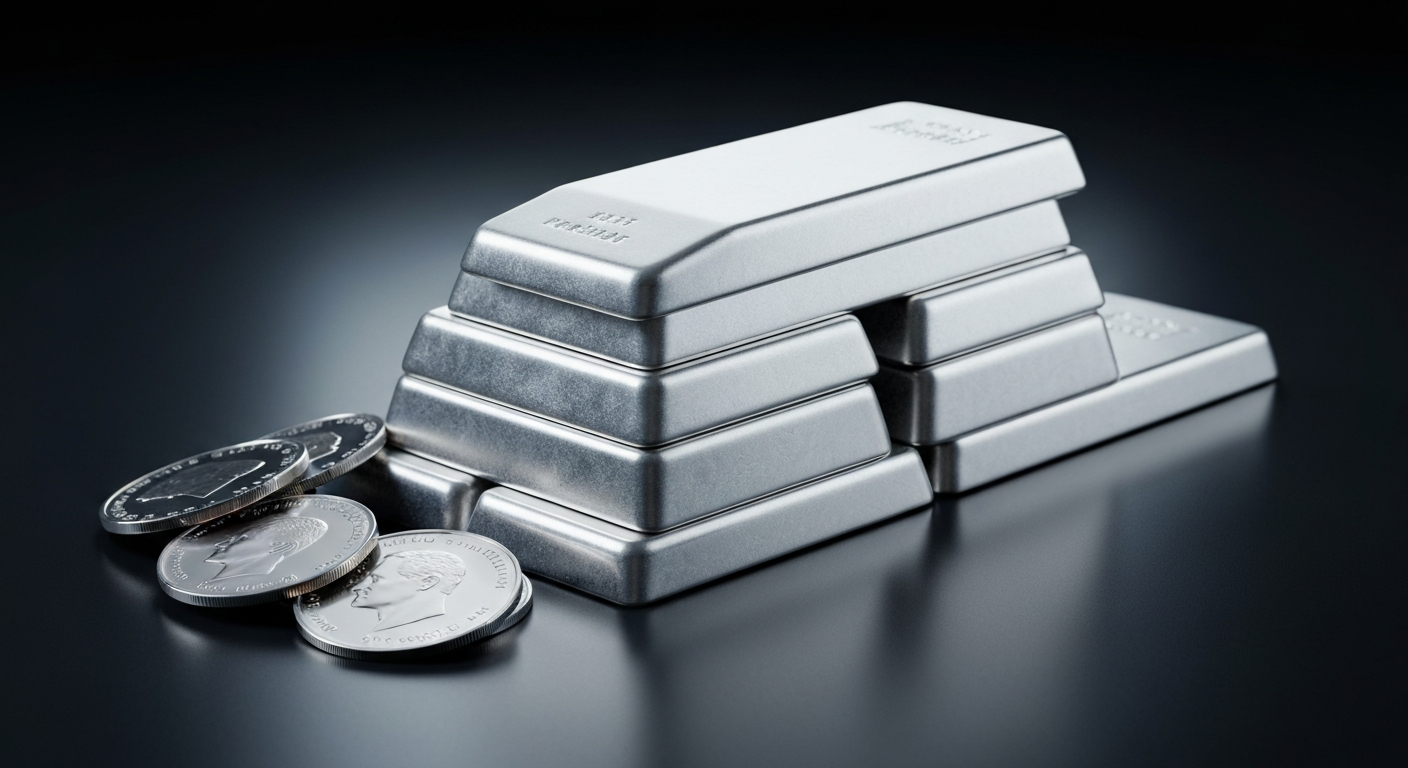
Silver is the affordable entry point into precious-metals investing — a tangible asset with both monetary history and heavy industrial demand. But buying silver bullion well means understanding the forms it comes in, the premiums you’ll pay, and how to store it. This silver bullion guide walks through everything you need to start investing in physical silver with confidence.
What is silver bullion?
Silver bullion is physical silver valued by its metal content and purity rather than any collectible premium. Investment-grade bullion is typically .999 fine (99.9% pure) or better, and comes in three main forms: government-minted coins, refiner bars, and privately minted rounds. Its price tracks the global silver spot price, plus a premium for fabrication and distribution.
Why invest in silver bullion?
- Affordability. Silver’s far lower price per ounce than gold makes it accessible — you can start with a single coin and build steadily.
- Dual demand. Silver is both a monetary metal and an industrial one — used in solar panels, electronics and EVs — so it draws demand from investors and industry alike.
- Inflation and crisis hedge. Like gold, physical silver is a tangible store of value outside the banking system.
- The gold-silver ratio. Many investors watch this ratio to judge whether silver looks cheap relative to gold; our gold-silver ratio guide explains how to use it.
- Supply tightness. Silver has run structural supply deficits in recent years, which supports the long-term case — see our outlook on how high silver could go.
The trade-off is volatility: silver tends to swing harder than gold in both directions, so it rewards patience and a long-term view.
The forms of silver bullion
Silver coins
Government-minted coins are the most popular bullion choice. The American Silver Eagle, Canadian Silver Maple Leaf and British Britannia are backed by national mints, carry a face value, and are instantly recognized and highly liquid worldwide. They carry the highest premiums of any bullion form because of their minting quality and demand, but that recognition makes them easy to resell.
Silver bars
Bars offer the lowest premium per ounce, making them the most cost-efficient way to accumulate weight. They range from 1 oz up to 100 oz, in two styles: cast bars (poured, rustic look, cheapest) and minted bars (struck, sharp finish, often with assay cards). Larger bars are cheaper per ounce but less divisible when you sell.
Silver rounds
Privately minted rounds look like coins but have no face value and aren’t legal tender. They typically cost less than government coins while still offering recognizable .999 purity — a middle ground between coins and bars.
Understanding silver premiums
The premium is the amount you pay above the spot price. It’s the single most important number for a silver buyer, because silver premiums are proportionally higher than gold’s — the fabrication cost is a bigger share of silver’s lower per-ounce value. As a rule: government coins carry the highest premiums, rounds sit in the middle, and large bars are cheapest per ounce. To get the most metal for your money, many investors favor bars and rounds for bulk and keep some recognized coins for liquidity. For a deeper comparison, see our guide on silver coins vs silver bars.
Where to buy silver bullion
Buy only from reputable, established dealers or directly from national mints. Look for transparent live pricing, clear premiums, strong reviews, and a buy-back policy. Compare the all-in price (spot + premium + shipping/insurance) across a couple of dealers before ordering, and be wary of deals that look far below market — counterfeits exist, so stick to trusted sources and recognized products.
Storing your silver
Silver is bulkier and heavier than gold for the same dollar value, so storage planning matters more. Your options:
- Home storage: a quality safe gives you direct control and instant access, but means handling security and insurance yourself. Keep silver dry — humidity causes tarnishing.
- Bank safe deposit box: secure, but not insured by the bank and not always accessible.
- Professional vaulting/depository: fully insured, allocated storage — ideal for larger holdings, for a recurring fee.
Whatever you choose, store bullion in its original packaging or protective sleeves to preserve condition and resale value.
How to start investing in silver
- Set your goal and budget. Decide what role silver plays in your portfolio and how much to allocate.
- Choose your mix. Coins for liquidity and recognition; bars and rounds for cost-efficient weight.
- Compare dealers on all-in price and reputation.
- Plan storage before you buy — don’t let bullion arrive with nowhere safe to go.
- Buy steadily. Many investors dollar-cost average, buying regularly to smooth out silver’s volatility rather than timing the market.
Common mistakes to avoid
- Overpaying on premiums — always check the premium over spot, especially on coins.
- Buying “rare” or numismatic silver as an investment — for bullion exposure, stick to standard .999 products.
- Ignoring liquidity — ultra-large bars are cheap but harder to sell in part.
- Poor storage — tarnish and damage reduce resale value.
- Chasing the price — silver is volatile; a long-term, steady approach beats panic buying and selling.
Frequently asked questions
Is silver bullion a good investment?
Silver offers affordable precious-metals exposure with both monetary and industrial demand, making it a popular hedge. It’s more volatile than gold, so it suits investors with a long-term horizon.
Should I buy silver coins or bars?
Coins are more liquid and recognizable but carry higher premiums; bars give you more metal per dollar. Many investors hold a mix — coins for liquidity, bars for bulk.
Why are silver premiums so high?
Because fabrication costs are a larger share of silver’s low per-ounce price, premiums are proportionally higher than gold’s — and highest on minted government coins.
How should I store silver bullion?
Options include a home safe, a bank safe deposit box, or insured professional vaulting. Keep silver dry and in protective packaging to prevent tarnish, and insure larger holdings.
This guide is for educational purposes and is not financial advice. Precious metals carry risk — do your own research or consult a qualified advisor before investing.