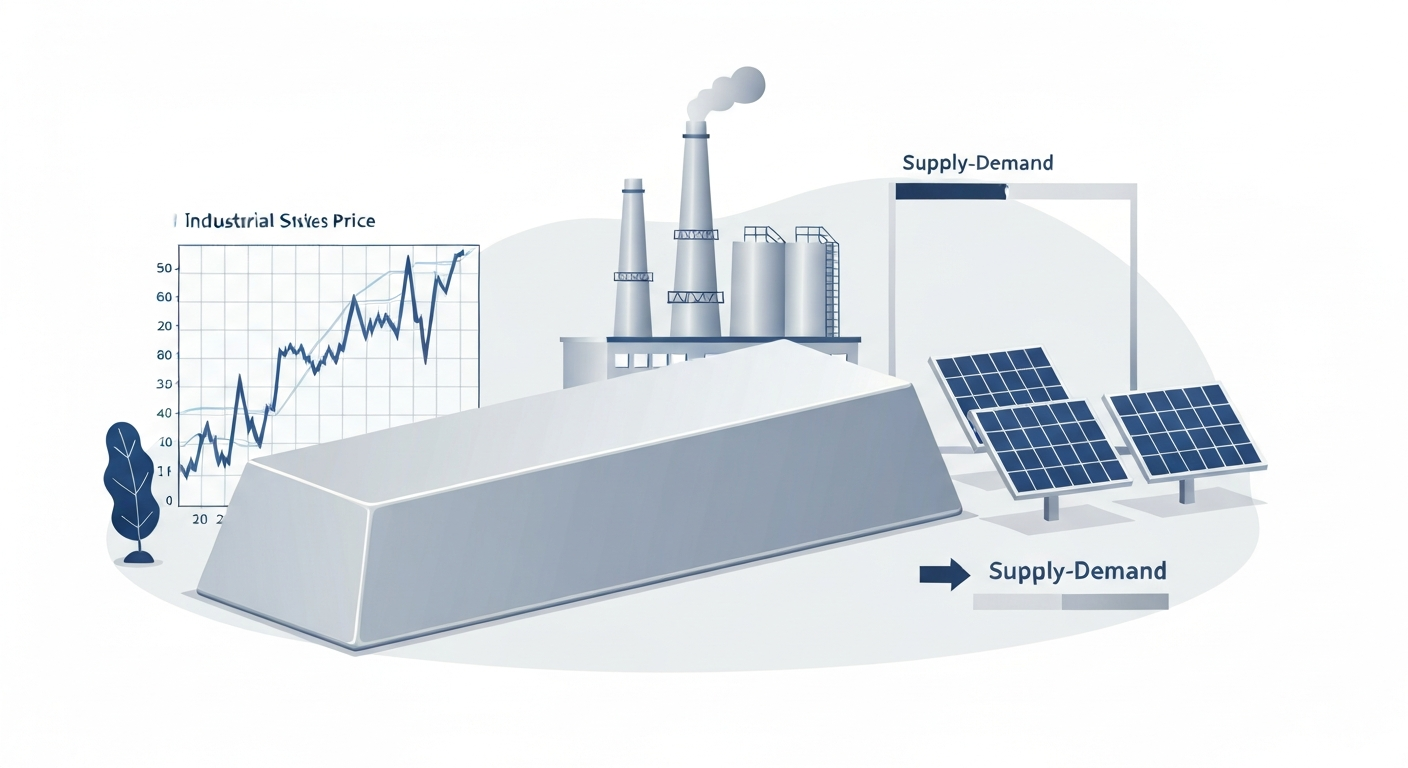
Silver has a reputation for being volatile — capable of soaring and slumping far more sharply than gold. That is because silver is pulled by two very different forces at once: it is both a precious metal that investors hoard and an industrial metal that factories consume. Understanding what moves the silver price helps you make sense of its dramatic swings. Here are the key drivers.
Silver’s dual identity
The single most important thing to grasp about silver is that it wears two hats. On one hand, it is a monetary and safe-haven asset, bought as a store of value much like gold. On the other, roughly half of all silver demand comes from industry, where it is used in real products. This dual nature is why silver behaves differently from gold: it responds both to investor sentiment and to the health of the global economy.
Industrial demand
Silver is the best electrical and thermal conductor of all metals, which makes it indispensable to modern technology. It is used in solar panels, electronics, electric vehicles, batteries, and medical equipment. The booming solar industry in particular has become a major source of silver demand, since photovoltaic cells rely on it. When the global economy and manufacturing are strong — and when green-technology adoption accelerates — industrial silver demand rises and supports the price. In a recession, that same industrial demand can fall away quickly.
Investment demand and safe-haven flows
Like gold, silver attracts investors during times of economic uncertainty, inflation, and currency weakness. Demand for coins, bars, and silver-backed funds can surge when people worry about the financial system, driving prices higher. Because the silver market is much smaller than the gold market, a wave of investment buying can move the price far more dramatically — a key reason silver is so volatile.
The gold price and the gold-silver ratio
Silver tends to follow gold’s general direction, since both are precious metals influenced by the same macro forces — interest rates, the dollar, and inflation. Traders watch the gold-silver ratio, which measures how many ounces of silver it takes to buy one ounce of gold. When the ratio is historically high, some investors judge silver to be cheap relative to gold and buy it, expecting the ratio to narrow. These flows can amplify silver’s moves.
The U.S. dollar and interest rates
Silver is priced in dollars, so a stronger dollar generally weighs on silver while a weaker dollar supports it. Interest rates matter too: because silver, like gold, pays no yield, higher real interest rates raise the opportunity cost of holding it and tend to pressure the price, while low or negative real rates make it more attractive. Central-bank policy therefore ripples straight into the silver market.
Supply factors
On the supply side, silver is unusual because most of it is produced as a by-product of mining other metals — copper, lead, zinc, and gold. This means silver supply does not always respond quickly to silver’s own price; it depends heavily on demand for those base metals. Mine disruptions, falling ore grades, and recycling rates all feed into the balance. When demand outpaces this relatively inelastic supply, prices can climb steeply.
Why silver is so volatile
Put these forces together and silver’s wild reputation makes sense. It is a small market buffeted simultaneously by investor sentiment and industrial cycles, with a supply that cannot flex easily. When safe-haven buying and an industrial upswing coincide, silver can rocket; when both fade, it can fall just as fast. For investors, that volatility is both the appeal and the risk.
The bottom line
Silver prices are driven by a unique blend of industrial demand — especially electronics and solar — and investment demand for a safe haven, layered on top of the dollar, interest rates, the gold price, and a by-product-heavy supply. That dual identity, in a relatively small market, is what gives silver its outsized swings. Watch both the economy and investor sentiment, and silver’s moves become far easier to understand.